
Fc-engineered human IgG1, human IgG2, and mouse IgG2a expression vectors designed to investigate complement enhancement or attenuation through Fc engineering.
CDC / COMPLEMENT MODULATED ANTIBODY EXPRESSION VECTOR SELECTION GUIDE
Compare seven Fc-engineered antibody expression vectors to select a suitable complement-modulated variant for your research.
| Catalog No. | Variant | Engineering Mechanism | Selection Guidance |
|---|---|---|---|
| AFV-22 | Human IgG1 (HexaBody-Extended) | E345K / E430G / E431K | Extended Fc hexamerization engineering for investigating antigen-dependent complement activation. |
| AFV-21 | Human IgG1 (HexaBody) | E345K / E430G | Fc hexamerization engineering for studying C1q recruitment and CDC. |
| AFV-25 | Human IgG1 (SEHF) | S267E / H268F | CH2 engineering for evaluating C1q binding and complement-mediated activity. |
| AFV-20 | Human IgG1 (WS) | K326W / E333S | CH2 engineering for studying complement-enhancing Fc interactions. |
| AFV-23 | Human IgG1 (K322A) | K322A | C1q-contact-site engineering for complement-attenuation studies in human IgG1. |
| AFV-24 | Human IgG2 (K322A) | K322A | Complement-attenuation studies using a human IgG2 Fc backbone. |
| AFV-10 | Mouse IgG2a (Comp-Null) | L235E / E318A / K320A / K322A | Mouse IgG2a Fc engineering for investigating reduced complement and Fc-effector interactions. |
Complement activity depends on antibody sequence, antigen density, Fc isotype, target cells, and assay conditions. Confirm C1q binding, complement deposition, and CDC experimentally.
Showing all 7 results
-
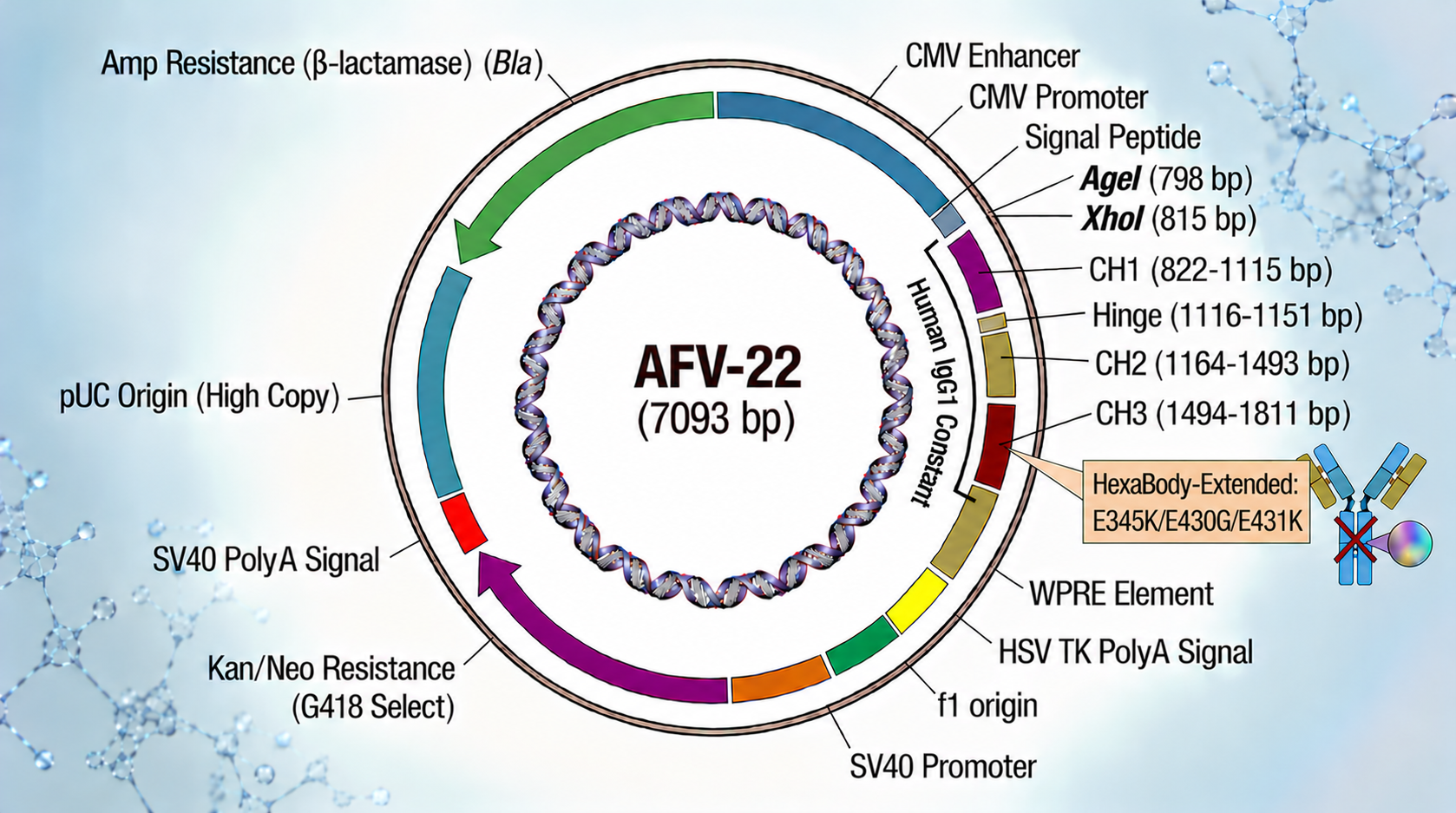
Human IgG1 (HexaBody-Extended: E345K/E430G/E431K)
Price range: $680.00 through $1,240.00 -
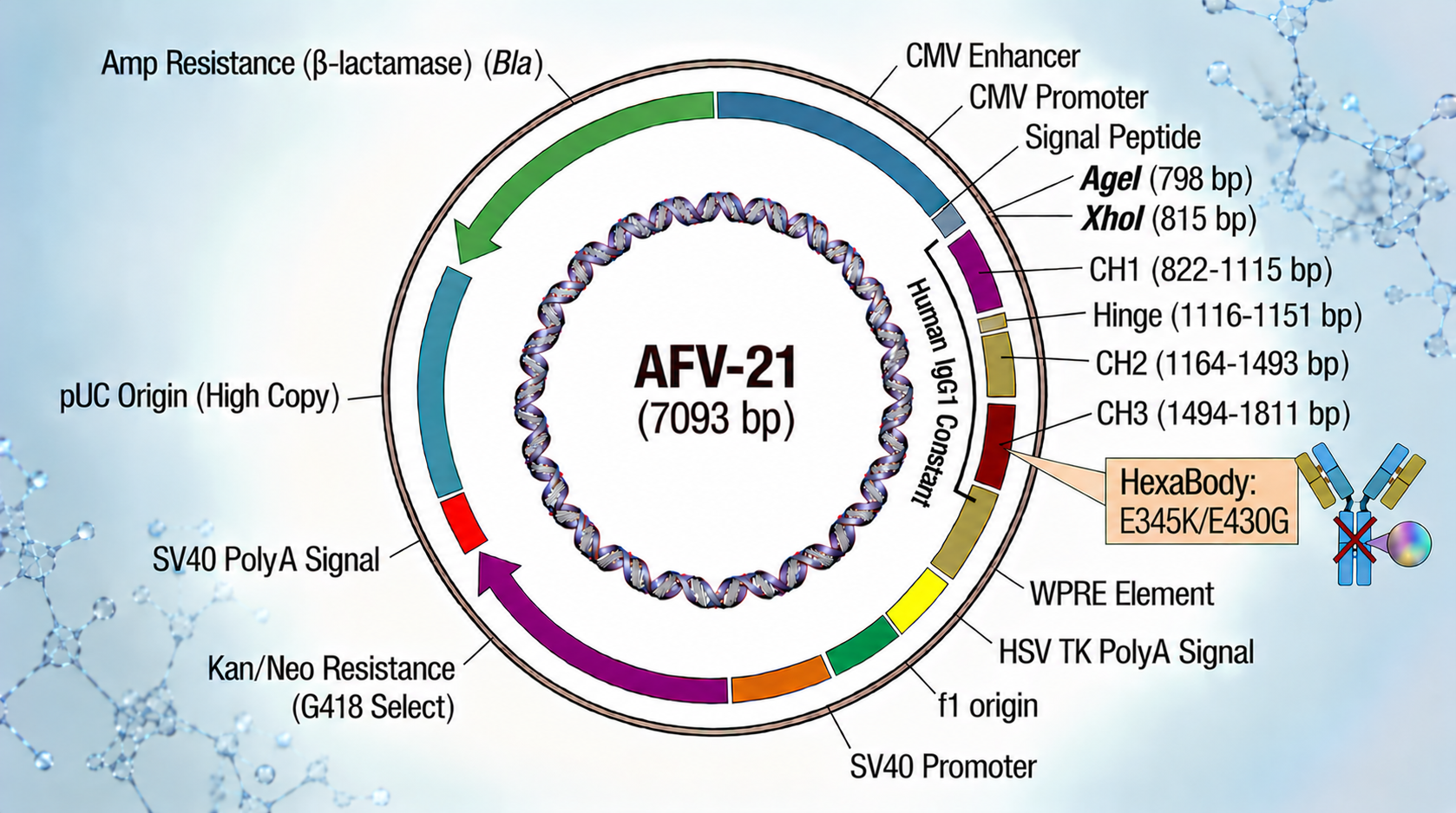
Human IgG1 (HexaBody: E345K/E430G)
Price range: $680.00 through $1,240.00 -
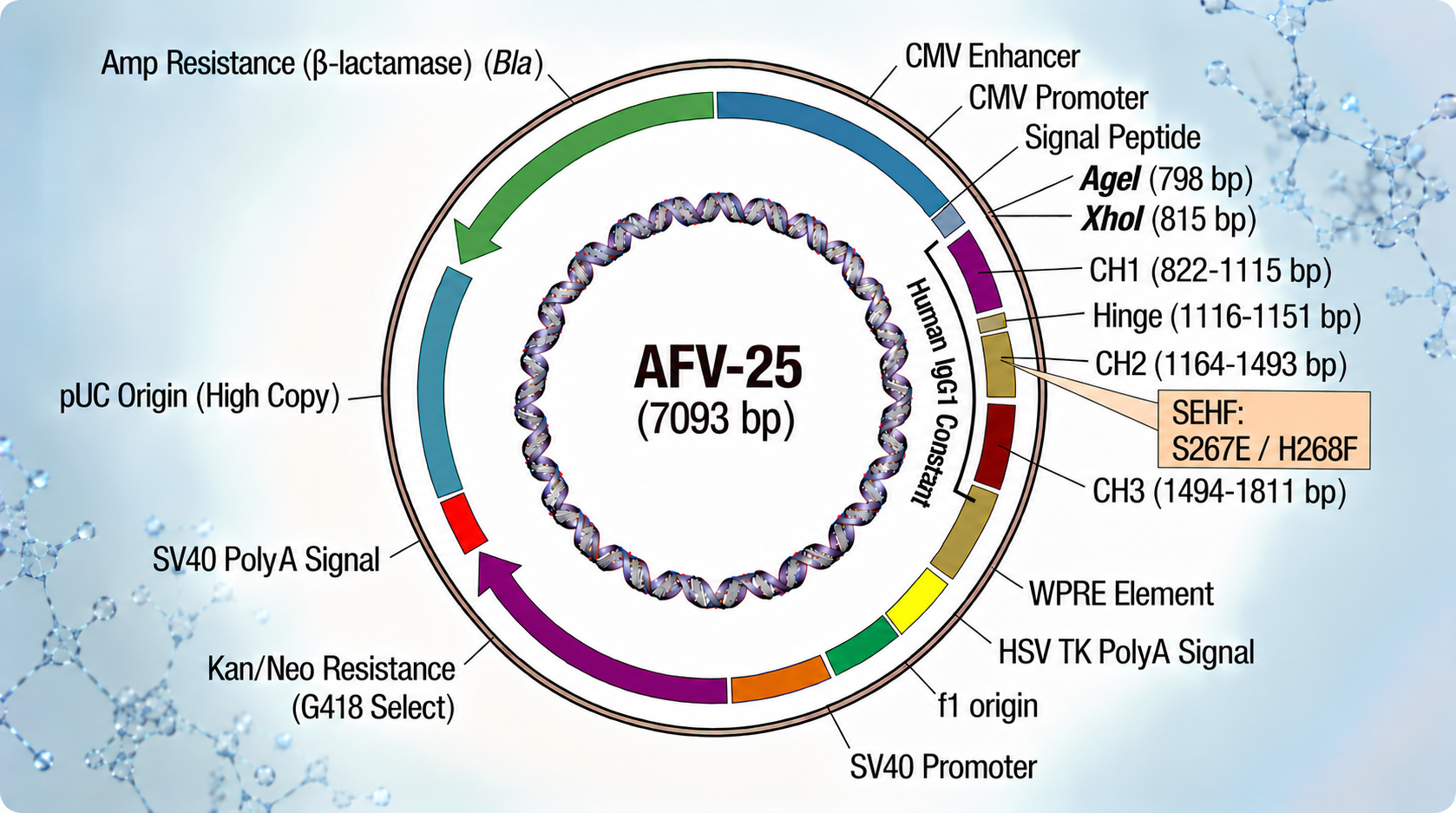
Human IgG1 (SEHF: S267E/H268F)
Price range: $680.00 through $1,240.00 -
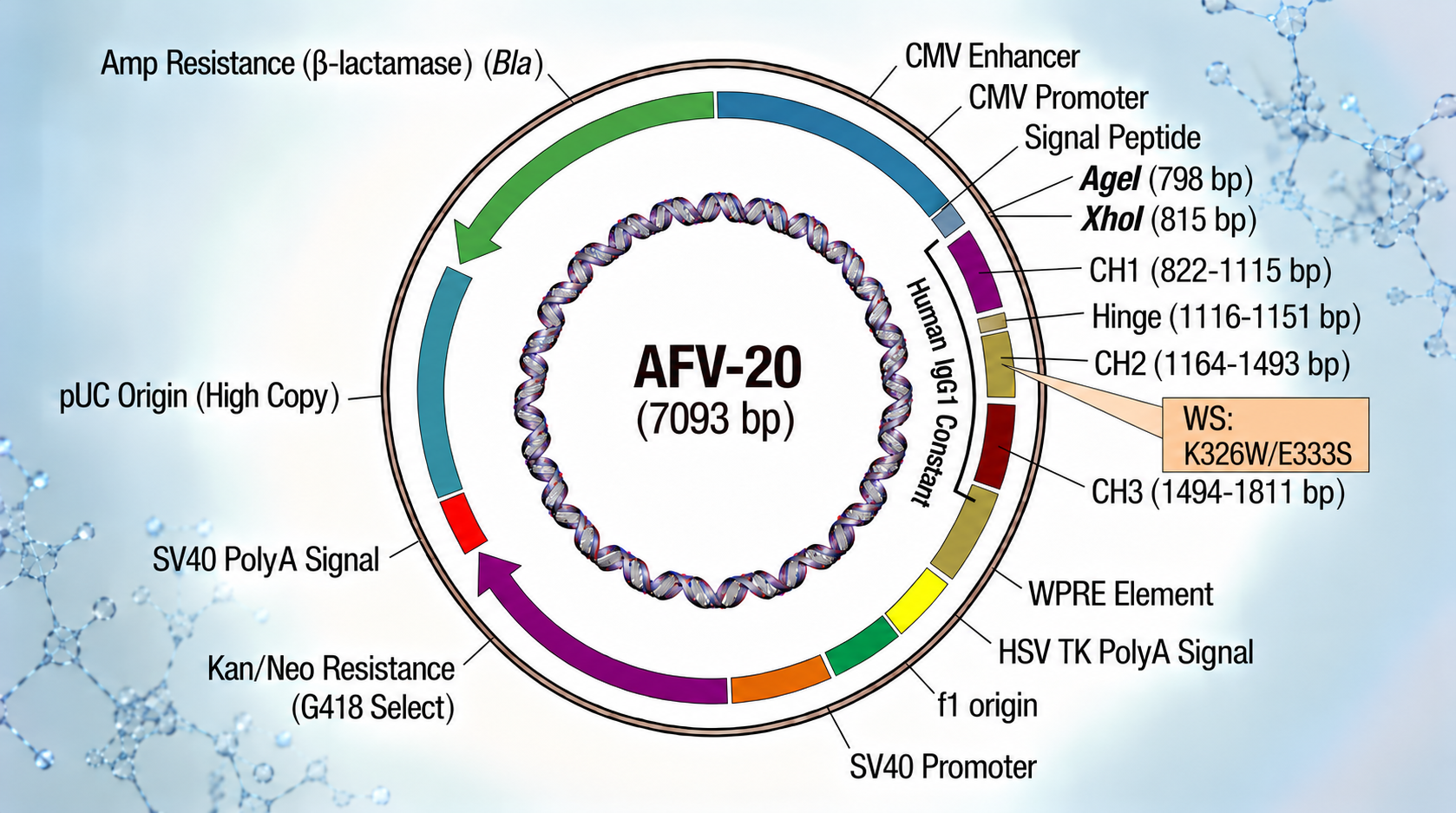
Human IgG1 (WS: K326W/E333S)
Price range: $680.00 through $1,240.00 -
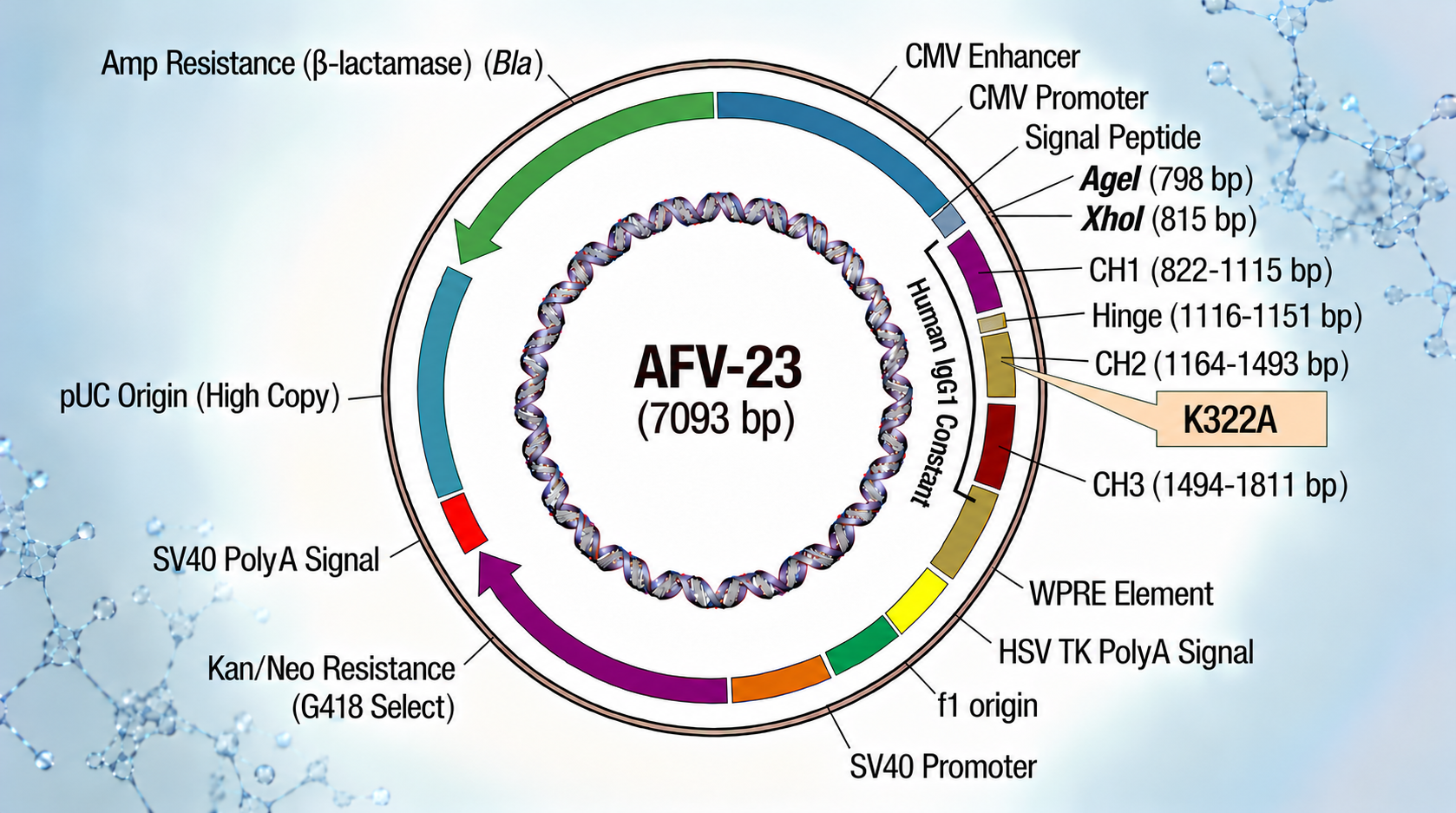
Human IgG1 (K322A)
Price range: $680.00 through $1,240.00 -
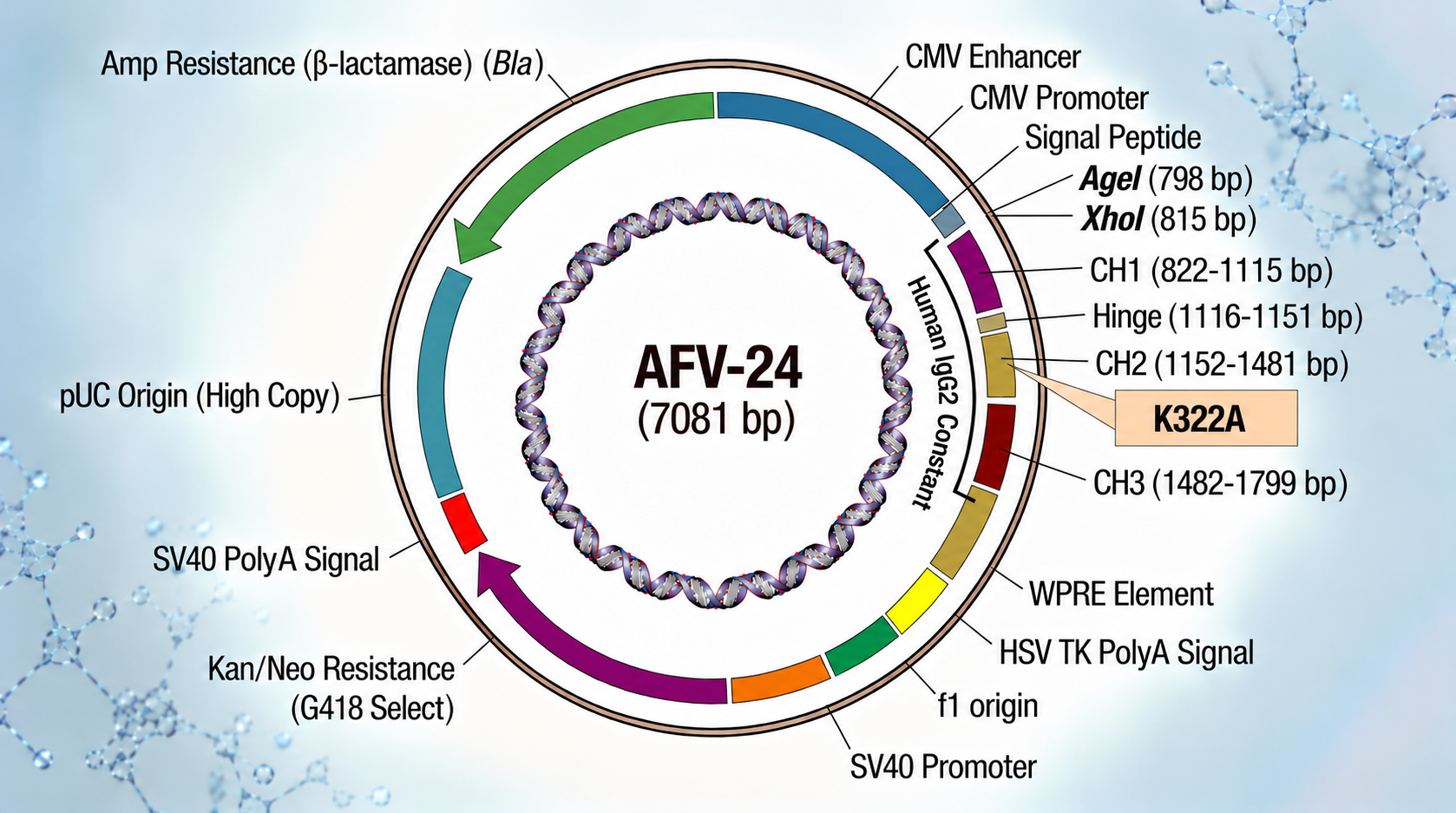
Human IgG2 (K322A)
Price range: $680.00 through $1,240.00 -
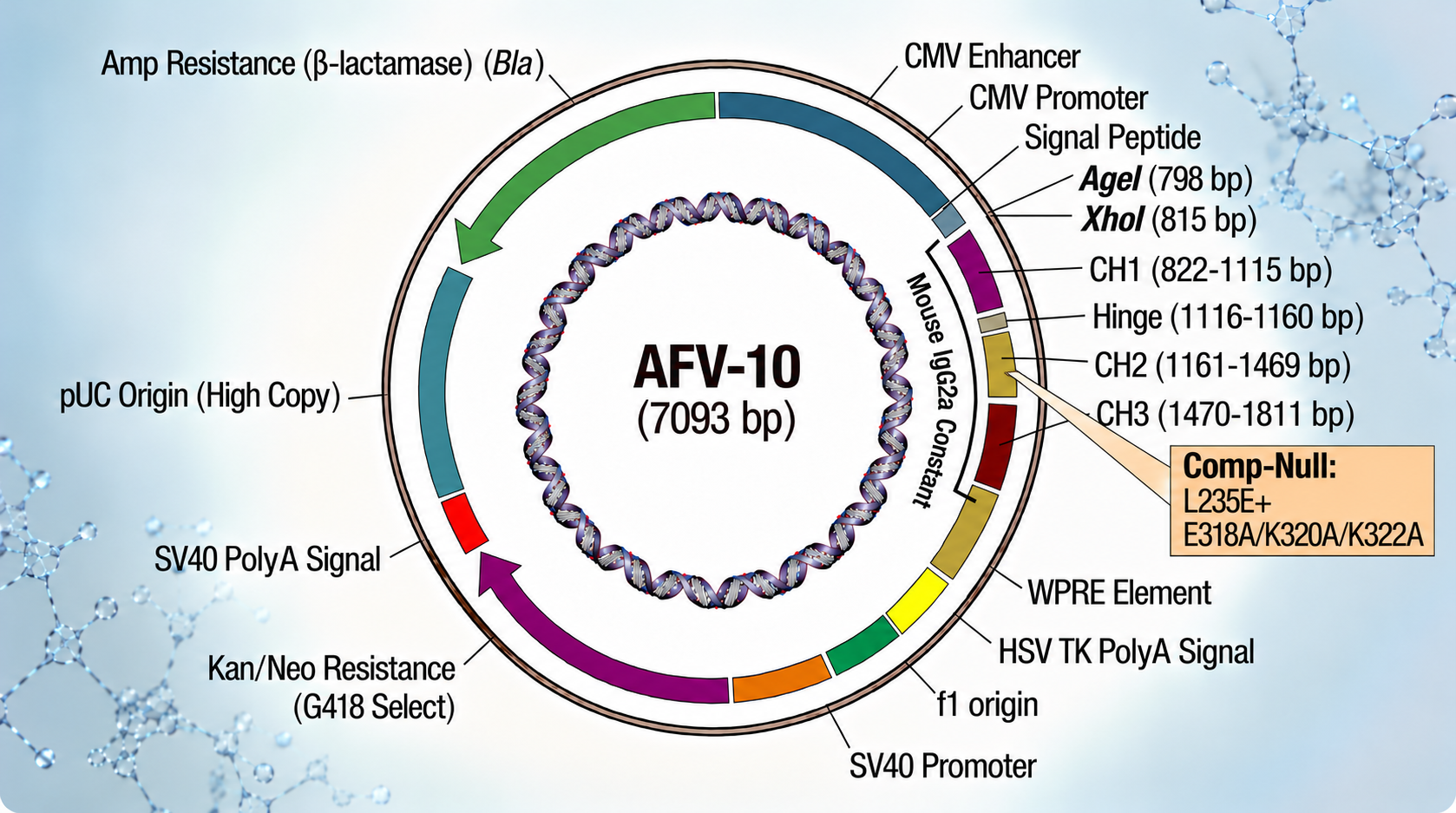
Mouse IgG2a (Comp-Null: L235E + E318A/K320A/K322A)
Price range: $680.00 through $1,240.00