Plasmid Name
pHC-IgG1(WS)
Mutation Set
K326W / E333S
Selection Marker
Ampicillin
Promoter
CMV
Fc Engineering Overview
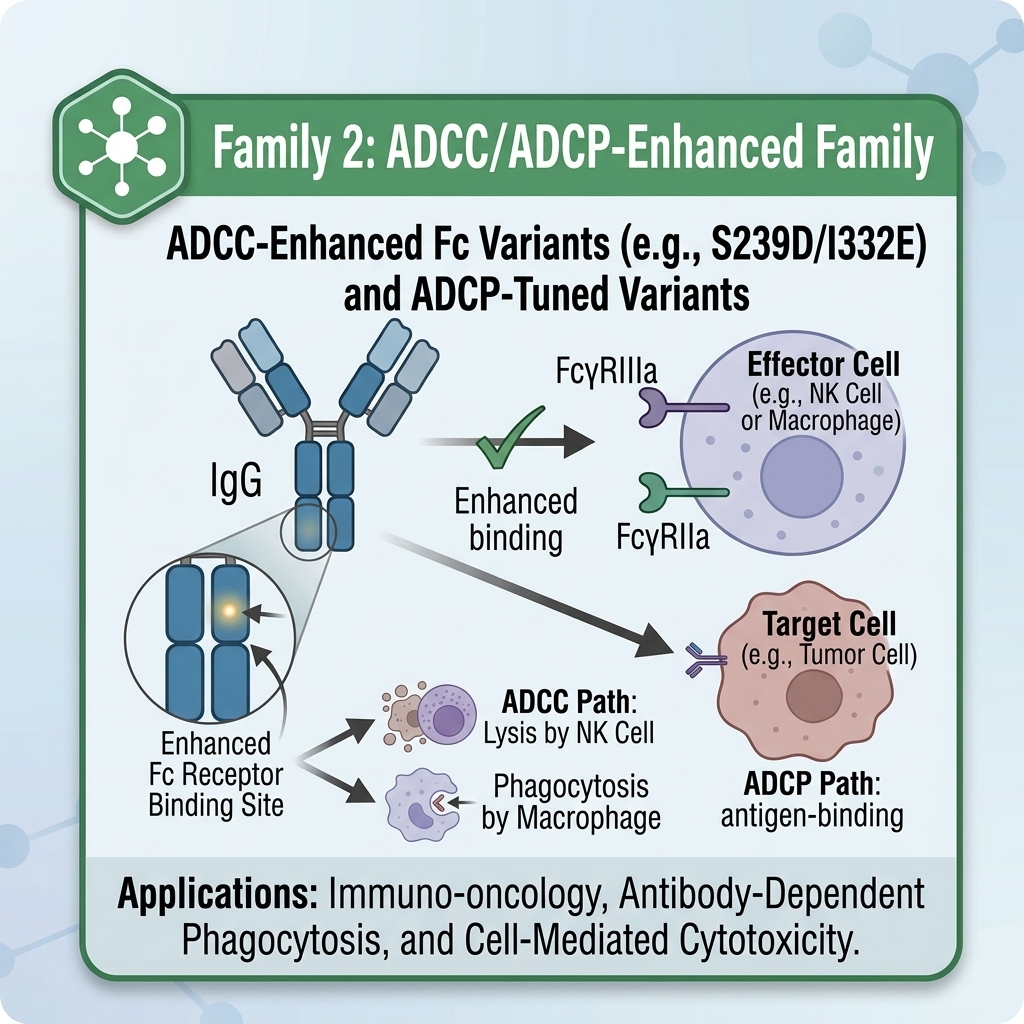
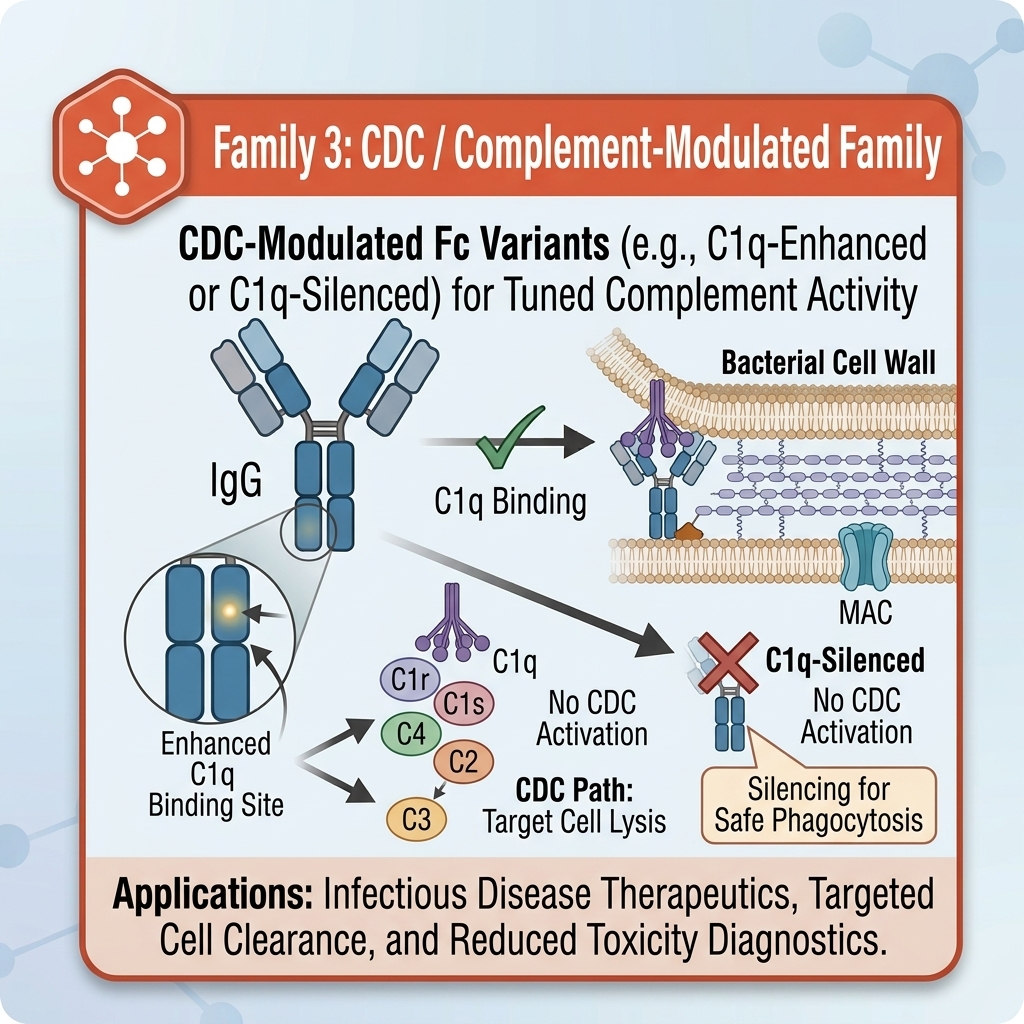
The human IgG1 (WS) Fc variant introduces a synergistic double mutation in the CH2 domain designed to significantly enhance C1q binding affinity (~5-fold). This modification drives robust complement-dependent cytotoxicity (CDC) while simultaneously providing a moderate boost to FcγRIIIa engagement and ADCC activity without altering FcRn-mediated stability.
Functional Profile
| Property | Effect |
|---|---|
| FcγRIIIa binding | Moderately Increased ↑ (~ 1.5-2 x) |
| ADCC | Moderately Enhanced ↑ |
| CDC | Strongly Increased ↑↑ (~ 5 x C1q affinity) |
| FcRn binding | Normal / WT Baseline |
| Serum half-life | Normal / WT Baseline |
| Effector potency | Dual Enhanced (CDC-dominant with moderate ADCC boost) |
Mechanism of Action
The WS Fc variant introduces two synergistic CH2-domain mutations—Lys326 to Trp and Glu333 to Ser—that optimize the Fc–C1q interaction surface:
- K326W Substitution: Introduces a bulky hydrophobic tryptophan residue that improves packing at the C1q interface.
- E333S Substitution: Removes a negative charge, enhancing electrostatic complementarity with C1q.
Together, these mutations increase C1q binding affinity by approximately 5-fold and drive robust complement activation and lysis, while also providing a modest boost in FcγRIIIa engagement.
Phenotypic Effects
- Strongly enhanced complement-dependent cytotoxicity (CDC).
- Significantly increased C1q binding affinity (~ 5 x).
- Moderate enhancement of FcγRIIIa binding and ADCC activity.
- Maintains normal FcRn-mediated endosomal recycling and serum half-life.
- Ideal for cell-depleting antibodies requiring heightened dual-effector function.
Applications
- Oncology antibodies where CDC is a primary mechanism of action.
- Depleting therapeutics targeting low-density cell-surface antigens.
- Preclinical optimization of dual CDC/ADCC-enhanced therapeutic candidates.
- Mechanistic benchmark for C1q–Fc interface interactions.
Plasmid Map & Feature Annotation
Insert Structure: VH – CH1 – hinge – CH2(K326W/E333S) – CH3
- VH: Variable heavy domain
- CH1: Constant heavy 1
- Hinge: Native IgG1 hinge
- CH2 (K326W/E333S): Complement-enhancing double mutation
- CH3: Native IgG1 CH3
Product Note: The WS Fc variant is a classic complement-enhancing Fc module. It is one of the most widely cited CDC-enhancing double mutants in antibody engineering literature and serves as an ideal choice when heightened complement activation is required without sacrificing ADCC or FcRn stability.
Fusion BioLabs Complement Modulated Family Comparison Matrix
| Variant | Mechanism | Complement Effect | Primary Application & Notes |
|---|---|---|---|
| human IgG1 (WT) Wild-Type |
Native C1q binding | ★★☆☆☆ | Baseline Control. Standard physiological C1q binding and CDC baseline for comparative assays. |
| human IgG1 (HexaBody-Extended) E345K / E430G / E431K |
On-cell hexamerization | ★★★★★+ | Hyper-CDC Enhancer. Triple mutation maximizing Fc-Fc intermolecular interactions; yields ultra-potent C1q avidity against ultra-low density antigen targets. |
| human IgG1 (HexaBody) E345K / E430G |
On-cell hexamerization | ★★★★★ | Canonical CDC-Boosting Fc. Enhances cell-surface hexamer assembly upon antigen binding to drastically boost C1q recruitment and membrane attack complex (MAC) formation. |
| human IgG1 (SEHF) S267E / H268F |
C1q binding loop enhancement | ★★★★☆ | High-Potency CDC Enhancer. Optimizes local electrostatic and structural interactions with C1q to boost complement lysis without requiring hexamerization. |
| human IgG1 (WS) K326W / E333S |
C1q binding loop enhancement | ★★★☆☆ | This Product. Strong CDC Enhancer. Synergistic double mutation in CH2 that significantly increases C1q binding affinity and complement killing. |
| human IgG1 (K322A) K322A |
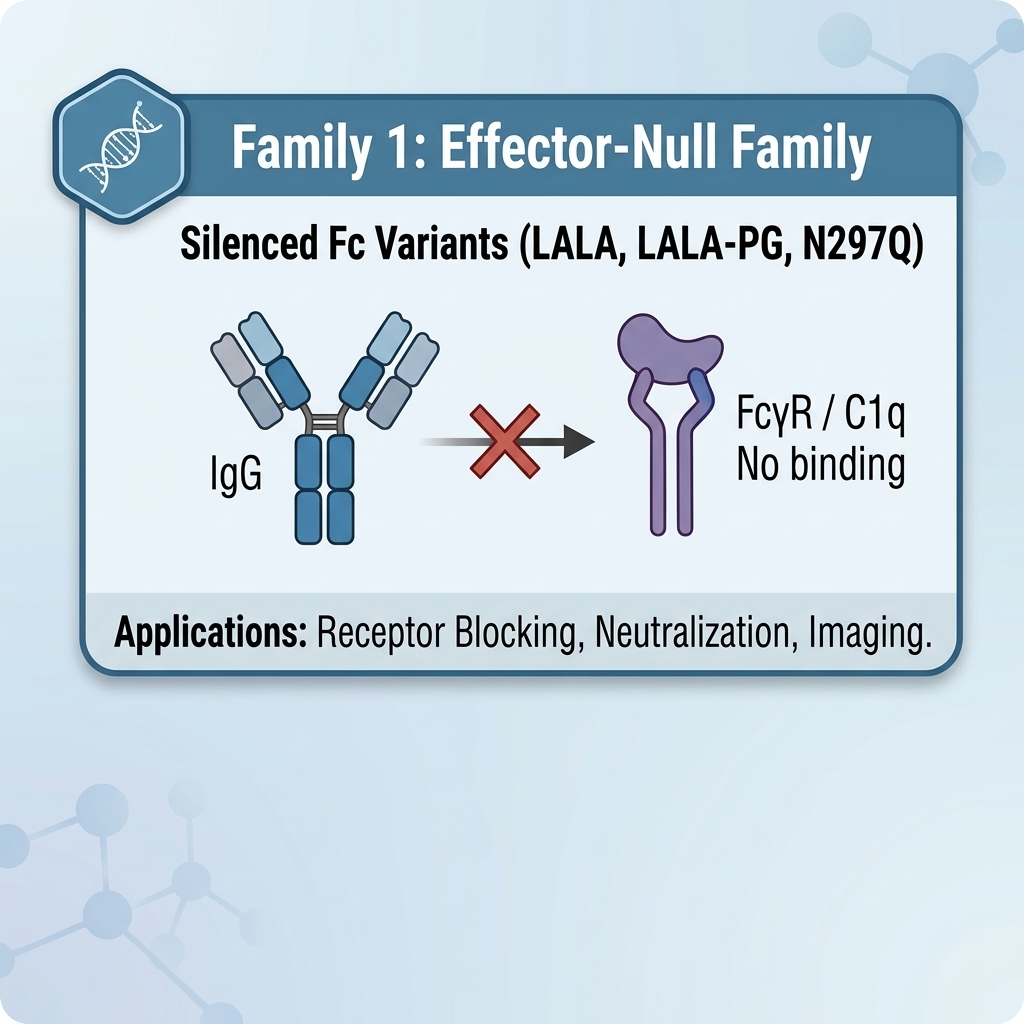
C1q contact site ablation | ★☆☆☆☆ | Selective Human IgG1 CDC-Null. Abolishes C1q binding and CDC while maintaining native FcγR engagement (ADCC+/ADCP+). |
| human IgG2 (K322A) K322A |
C1q contact site ablation | ★☆☆☆☆ | Completely Silent Human IgG2 Control. Eliminates residual IgG2 C1q binding to yield a fully inert neutralizer (ADCCnull/ADCPnull/CDCnull). |
| mouse IgG2a (CompNull) L235E + E318A / K320A / K322A |
Complement binding triad ablation | ★☆☆☆☆ | Murine CDC-Null Control. Completely abolishes complement activation in murine models while preserving mouse FcγR engagement for syngeneic in vivo studies. |
Storage & Handling
- Store plasmid at −20°C.
- Avoid repeated freeze–thaw cycles.
- Use sterile technique when handling.
- Suitable for transient or stable mammalian expression.
References
- Idusogie EE, Wong PY, Presta LG, Gazzano-Santoro H, Totpal K, Ultsch M, Mulkerrin MG. Engineered antibodies with increased activity to recruit complement. J Immunol. 2001;166(4):2571-2575.