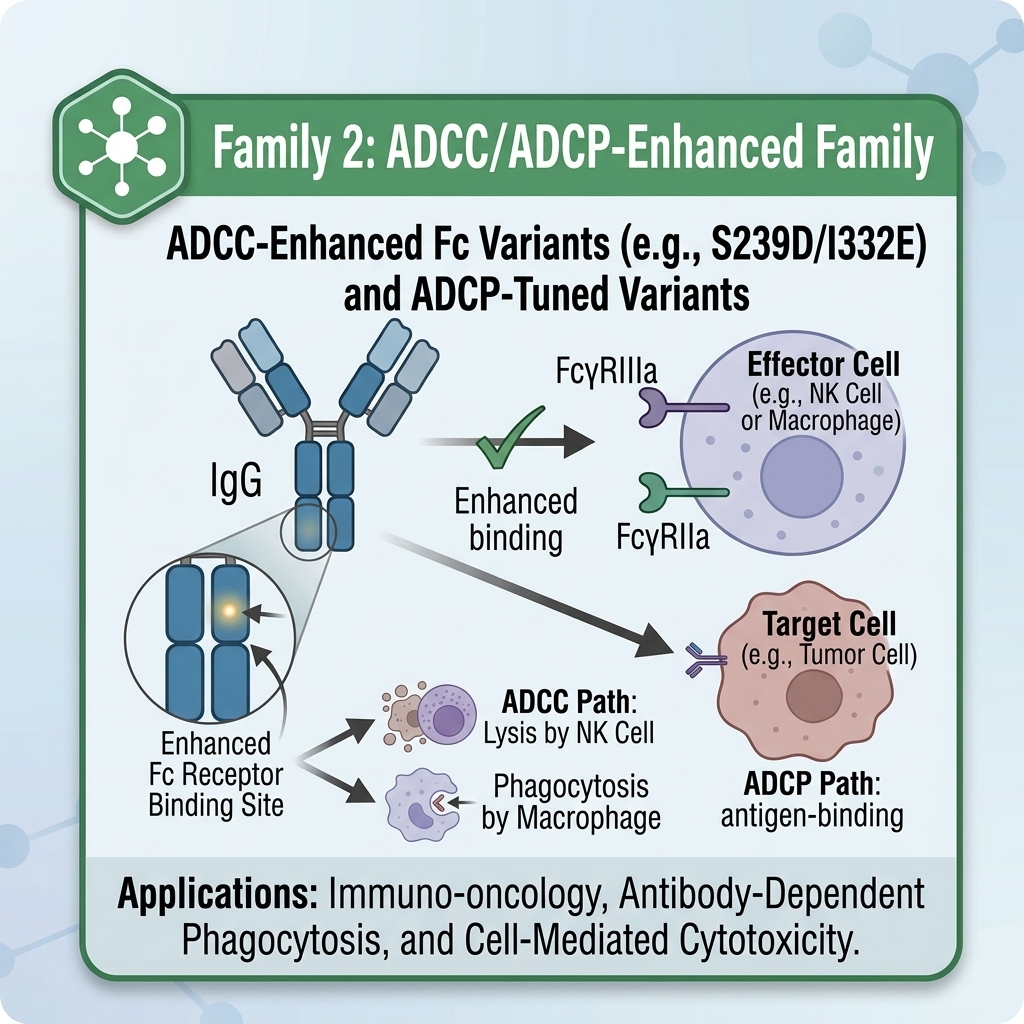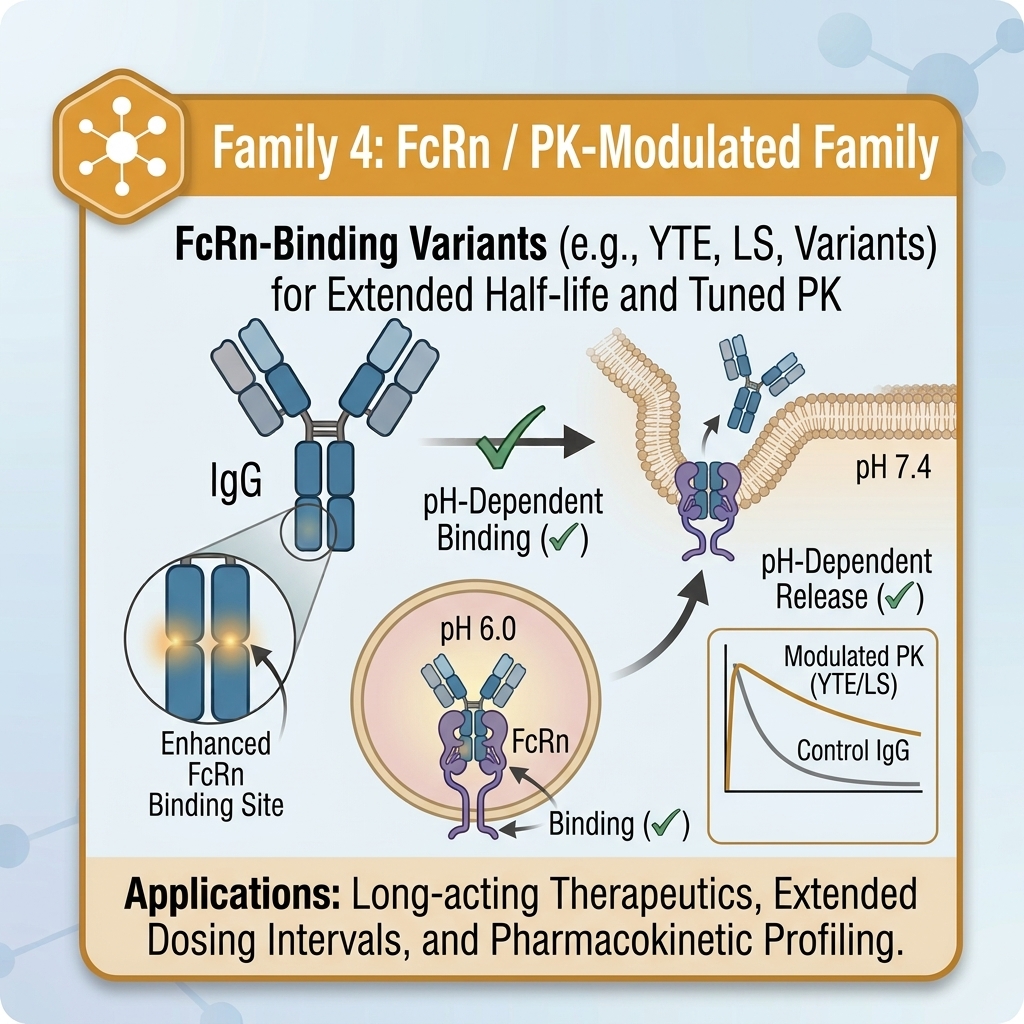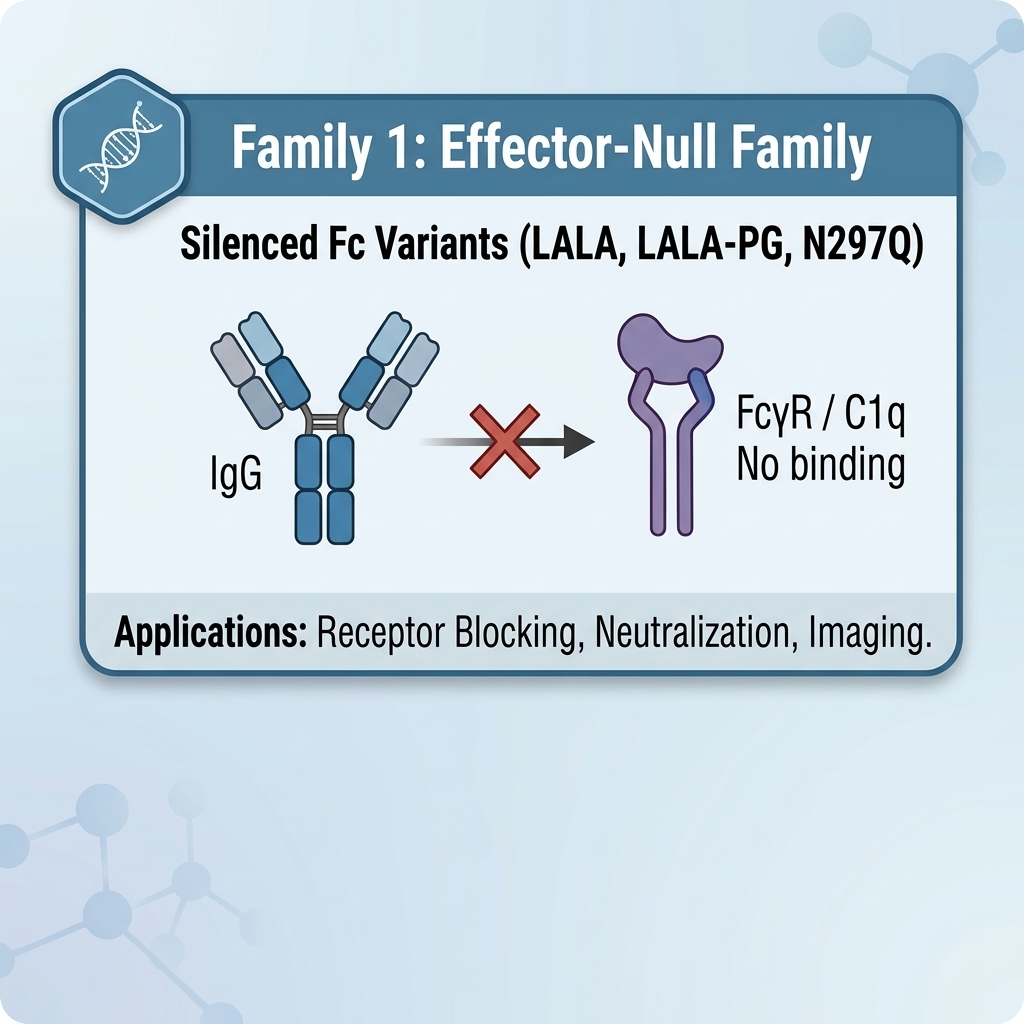
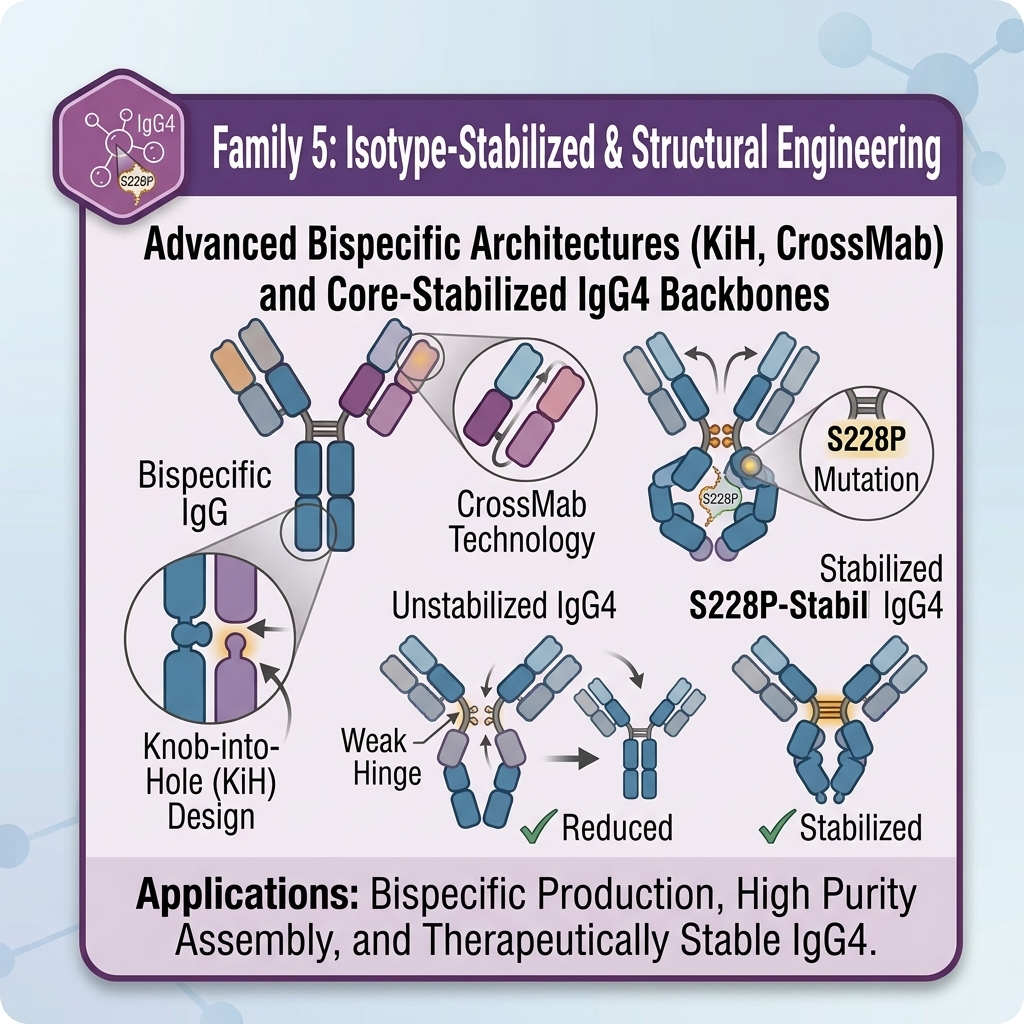
Fc Engineering Overview
Human IgG4 (PE) Fc Variant combines hinge stabilization (S228P) with lower-hinge silencing (L235E). While standard IgG4 (S228P) eliminates Fab-arm exchange, it retains residual affinity for FcγRI (CD64). The addition of L235E abolishes this residual binding, creating an ultra-silent IgG4 backbone that prevents both structural recombination and unwanted immune activation.
Functional Profile
| Property | Effect |
|---|---|
| Fab-Arm Exchange (in vivo) | Completely Abolished (0%) |
| FcγRI (CD64) binding | Completely Abolished ↓↓↓↓ |
| FcγRII/III binding | Undetectable |
| ADCC / ADCP | Completely Null |
| C1q binding / CDC | Undetectable |
| FcRn binding & recycling | Unaltered / Normal Half-life |
Mechanism of Action
S228P Substitution: Re-introduces the rigid CPPC motif into the core hinge, establishing permanent inter-heavy chain disulfide linkages and preventing half-antibody formation.
L235E Substitution: Introduces a negative charge and steric perturbation into the lower hinge region, disrupting the hydrophobic interaction required for high-affinity FcγRI (CD64) engagement without affecting FcRn endosomal recycling loops.
Phenotypic Effects
- Complete protection against in vivo Fab-arm exchange and dynamic exchange with host IgGs.
- Elimination of residual FcγRI-mediated monocyte/macrophage activation and cytokine release.
- Zero detectable NK cell-mediated ADCC or macrophage-mediated ADCP.
- Total absence of complement activation or C1q binding.
- Maintains full serum half-life via intact FcRn interactions.
- High structural integrity and batch homogeneity during recombinant mammalian expression.
Applications
- Safety-critical therapeutic antibodies where complete elimination of FcγRI binding on an IgG4 framework is required.
- Receptor-targeted antagonist or neutralizer antibodies where Fc-mediated receptor cross-linking or target-cell destruction must be completely avoided.
- Immune checkpoint modulators targeting immune cells sensitive to FcγR-mediated hyper-activation.
Sequence Map & Feature Annotation
Insert Architecture: VH – CH1 – hinge(S228P) – lower hinge(L235E) - CH2(WT) – CH3(WT)
- VH: Variable heavy domain
- CH1: Constant heavy 1
- Hinge(S228P): Stabilized IgG4 core hinge region (CPPC)
- Lower Hinge(L235E): Effector-silencing lower hinge substitution
- CH2: Constant heavy 2 (WT)
- CH3: Constant heavy 3 (WT)
Storage & Handling
Plasmid: Store at −20 °C
Purified antibody:
- 2–8 °C for short-term storage
- −80 °C for long-term storage
- Avoid repeated freeze–thaw cycles
- Use sterile technique for all handling
- Optimized for transient or stable expression in mammalian expression systems (CHO, HEK293)
References
- Alegre ML, Collins AM, Pulito VL, Brosius RA, Olson WC, Zivin RA, Knowles R, Thistlethwaite JR, Jolliffe LK, Bluestone JA. Effect of a single amino acid mutation on the activating and immunosuppressive properties of a “humanized” OKT3 monoclonal antibody. J Immunol. 1992; 148(11):3461-3468.
- Reddy MP, Kinney CA, Chaikin MA, Payne A, Fishman-Lobell J, Tsui P, Dal Monte PR, Doyle ML, Brigham-Burke MR, Anderson D, Reff M, Newman R, Hanna N, Sweet RW, Truneh A. Elimination of Fc receptor-dependent effector functions of a modified IgG4 monoclonal antibody to human CD4. J Immunol. 2000;164(4):1925-1933.