Plasmid Name
pHC-IgG1-EN
Mutation Set
E233P/L234V/L235A/ΔG236 + A327G/A330S/P331S
Selection Marker
Ampicillin
Promoter
CMV
Fc Engineering Overview
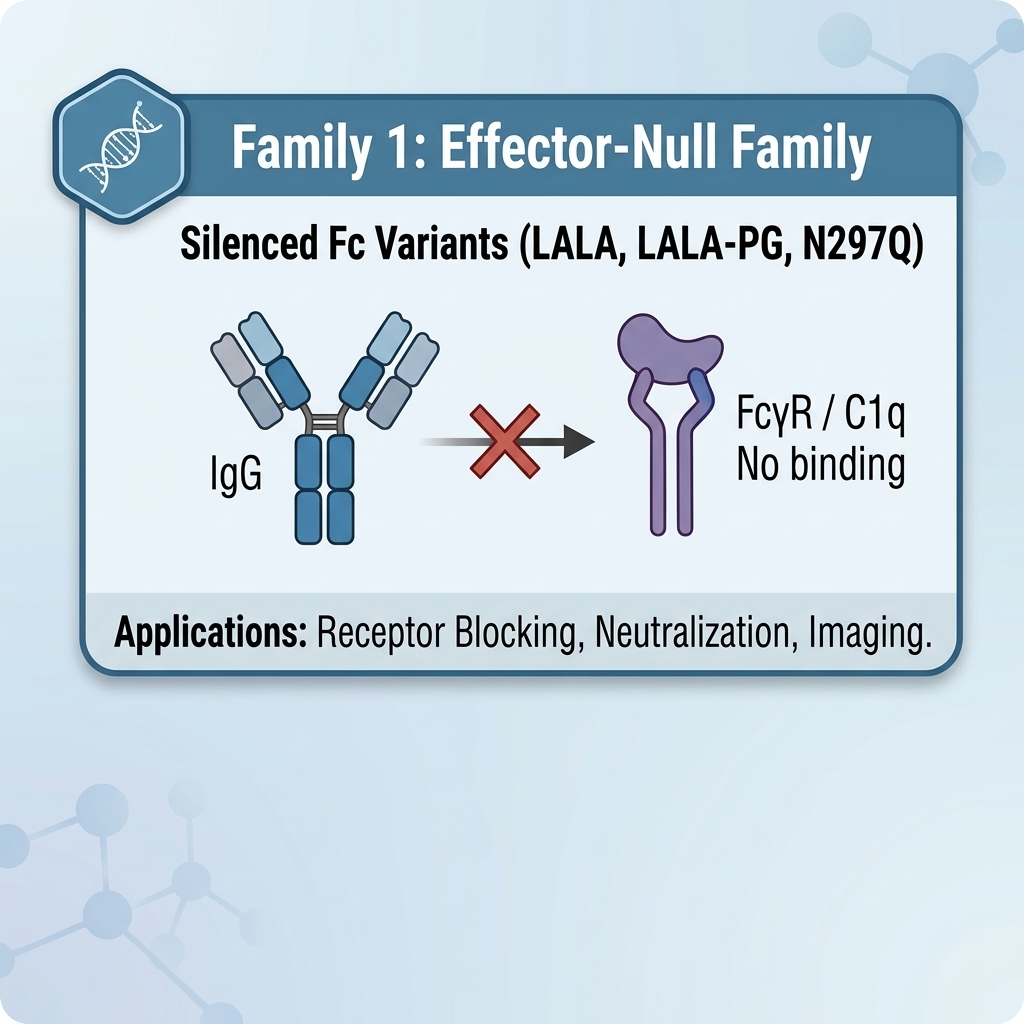
The human IgG1 (EN) Fc variant is an ultra-silent, multi-residue chimeric effector-null backbone based on the Armour paradigm. By transplanting sequence elements from non-effector human IgG2 and IgG4 subclasses into the IgG1 lower hinge (E233P/L234V/L235A/ΔG236) and CH2 complement loop (A327G/A330S/P331S), EN completely abolishes all FcγR engagement (FcγRI, IIa, IIb, IIIa) and C1q complement activation. It serves as Fusion BioLabs’ premier ultra-silent chimeric option.
Functional Profile
| Property | Effect |
|---|---|
| FcγRI/IIa/IIb/IIIa binding | Completely Abolished / Undetectable ↓↓↓↓ |
| ADCC | Completely Abolished ↓↓↓↓ |
| ADCP (Macrophage Phagocytosis) | Completely Abolished ↓↓↓↓ |
| C1q binding | Completely Abolished ↓↓↓↓ |
| CDC | Completely Abolished ↓↓↓↓ |
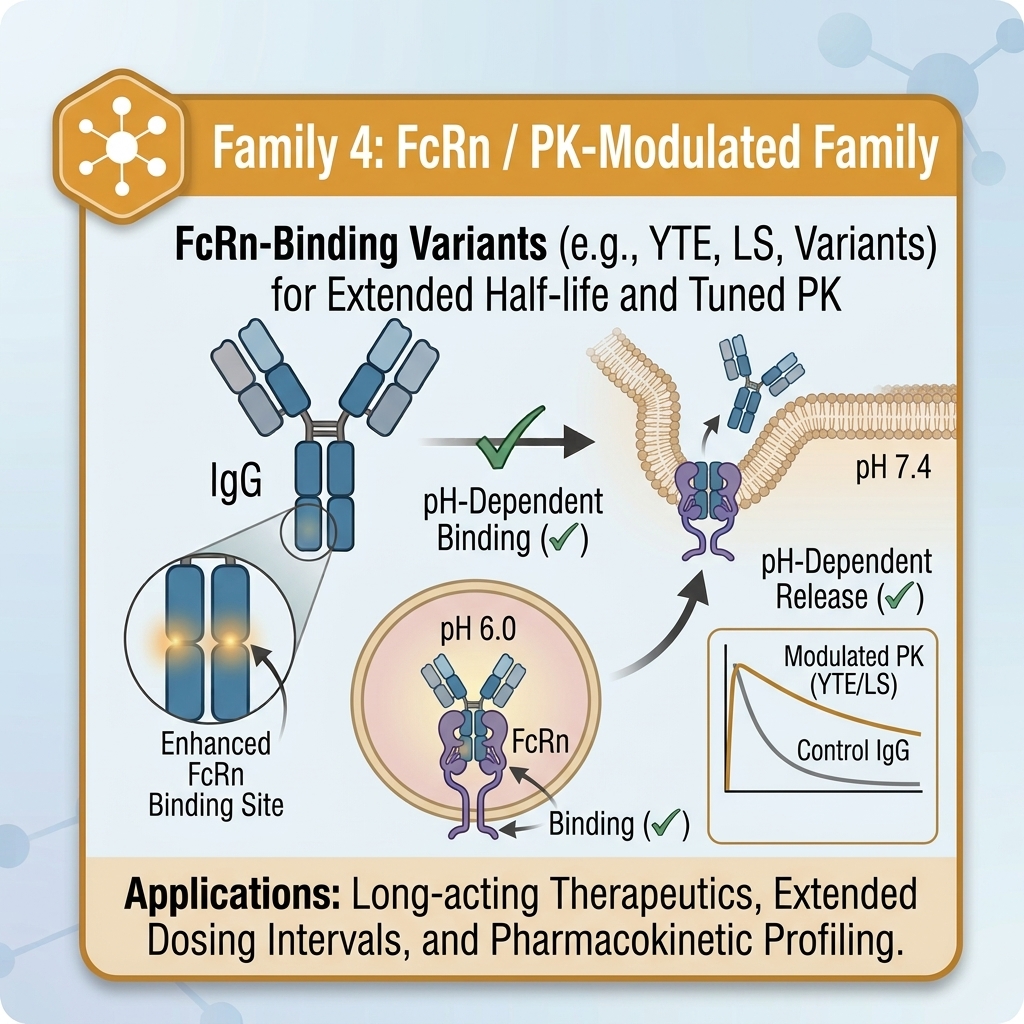
| FcRn binding & half-life | Normal / WT Baseline |
| Glycosylation & Thermal Stability | Intact (N297 glycan retained; native CH2 stability Tm ≈ 70°C) |
Mechanism of Action
The EN variant employs a dual-subdomain chimeric substitution strategy within the lower hinge and CH2 domain:
- Lower Hinge Silencing (E233P/L234V/L235A/ΔG236): Replaces the IgG1 lower hinge with the corresponding IgG2 sequence motif (PVA) and deletes Glycine 236. This eliminates the flexible hydrophobic ridge required for high-affinity FcγRI (CD64) and low-affinity FcγRII/III binding.
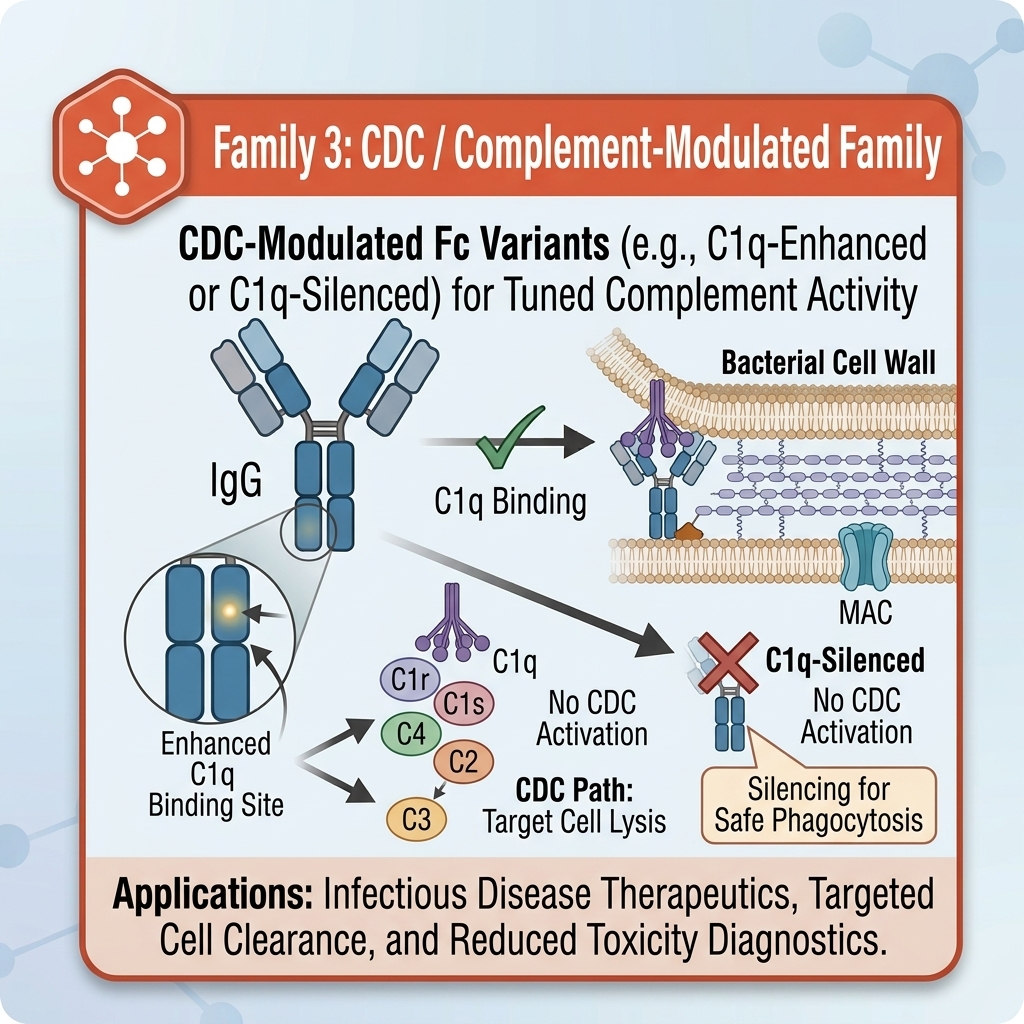
- CH2 Loop Silencing (A327G/A330S/P331S): Replaces IgG1 residues with IgG4/IgG2 equivalents in the Proline 331 loop. This disrupts the globular head C1q binding interface and prevents complement activation.
- Combined Effect: Dual-level disruption resulting in complete effector silencing while retaining full endosomal FcRn recycling and wild-type N297 glycosylation.
Phenotypic Effects
- Complete absence of NK cell-mediated ADCC, macrophage ADCP, and antibody-dependent cellular phagocytosis.
- Total loss of C1q binding and classical complement cascade activation (CDC-null).
- Zero detectable binding across all human Fcγ receptor classes.
- Preserves standard IgG1 pharmacokinetic half-life and endosomal recycling in vivo.
- Retains native N297 glycosylation, biophysical solubility, and high production yield.
Applications
- Safety-critical therapeutic antibodies where zero effector activity or Fc-mediated cytokine release is required.
- Immune checkpoint blockers (anti-PD-1, anti-PD-L1, anti-TIGIT, anti-CTLA-4) targeting cell-surface receptors on delicate immune populations.
- Agonist antibodies requiring pure target engagement without Fc receptor cross-linking.
- Multispecific and bispecific formats requiring an ultra-silent, non-immunogenic Fc backbone.
- Primary comparative reference for testing multi-residue sequence replacements against proline-sandwich variants (LALA-PG).
Plasmid Map & Feature Annotation
Insert Structure: VH – CH1 – hinge(E233P/L234V/L235A/ΔG236) – CH2(A327G/A330S/P331S) – CH3(WT)
- VH: Variable heavy domain
- CH1: Constant heavy 1
- Hinge: Native IgG1 core hinge
- Lower Hinge (E233P/L234V/L235A/ΔG236): IgG2-derived lower hinge substitution and deletion
- CH2 (A327G/A330S/P331S): CH2 complement loop substitutions (retains native N297 glycan)
- CH3 (WT): Native IgG1 CH3 domain
Product Note: Human IgG1 (EN) is a highly reinforced, multi-substituted effector-null Fc variant. Because its mutations are derived from human IgG2 and IgG4 sequence motifs, it delivers complete functional silencing while minimizing potential immunogenicity.
Fusion BioLabs EffectorNull Family Comparison Matrix
| Variant | Mechanism | Silencing Strength | Notes |
|---|---|---|---|
| human IgG1 (WT) | Wild-Type baseline | Baseline | Human WT Control. Native FcγR and C1q binding; fully active baseline control. |
| mouse IgG2a (WT) | Wild-Type baseline | Baseline | Murine WT Control. Native mouse FcγR and complement binding; active control for syngeneic models. |
| human IgG1 (EN) E233P / L234V / L235A / ΔG236 + A327G / A330S / P331S |
Lower hinge & CH2 chimeric sequence substitution | ★★★★★ | This Product. Ultra-Silent Chimeric Null. Cross-subclass IgG2/IgG4 sequence replacement; abolishes FcγR & CDC engagement. |
| human IgG1 (LALA-PG) L234A / L235A / P329G |
Lower hinge & CH2 proline-sandwich null | ★★★★★ | Clinical Gold Standard. Complete, double-silent suppression of all human FcγRs and C1q/CDC. |
| mouse IgG2a (LALA-PG) L234A / L235A / P329G |
Murine lower hinge & CH2 proline-sandwich | ★★★★★ | In Vivo Murine Gold Standard. Complete silencing of murine FcγRs and complement in syngeneic mouse models. |
| human IgG1 (LALA) L234A / L235A |
Lower hinge double alanine substitution | ★★★☆☆ | Classic Benchmark Control. Widely used legacy variant; retains minor residual FcγRI (CD64) binding. |
| human IgG1 (ΔG236) ΔG236 |
Lower hinge single residue deletion | ★★★☆☆ | Selective FcγR-Null. Dislocates FcγR binding site while preserving native N-glycan structure and C1q loops. |
| human IgG1 (N297Q) N297Q |
CH2 domain N-glycan site elimination | ★★★★☆ | Human Aglycosylated Control. Broad effector silencing via glycan removal; lowers thermal stability (Tm). |
| mouse IgG2a (N297Q) N297Q |
Murine CH2 domain N-glycan site elimination | ★★★★☆ | Murine Aglycosylated Control. Aglycosylated mouse control for in vivo preclinical rodent studies. |
Storage & Handling
- Plasmid: Store at −20°C.
- Purified Antibody: Store at 2–8°C for short-term storage; −80°C for long-term storage.
- Avoid repeated freeze–thaw cycles.
- Use sterile technique for all handling.
References
- Armour KL, Clark MR, Hadley AG, Williamson LM. Recombinant human IgG molecules lacking Fcgamma receptor I binding and monocyte triggering activities. Eur J Immunol. 1999;29(8):2613-2624.
- Idusogie EE, Presta LG, Gazzano-Santoro H, Totpal K, Wong PY, Ultsch M, Meng YG, Mulkerrin MG. Mapping of the C1q binding site on rituxan, a chimeric antibody with a human IgG1 Fc. J Immunol. 2000;164(8):4178-4184.
- Armour KL, van de Winkel JG, Williamson LM, Clark MR. Differential binding to human FcgammaRIIa and FcgammaRIIb receptors by human IgG wildtype and mutant antibodies. Mol Immunol. 2003;40(9):585-593.